
Hi, I'm Qvan Rov. I live in New York. Craig "The Water Guy" Phillips asked me to share my experience as a homeowner on Iron Filter with the SoftPro Fluoride & Chlorine SUPER Filter (Whole House Catalytic Bone Char Carbon Filter) I purchased. This is how my adventures played out. I hope this helps you in your decision.
Did you know that the average American household consumes over 300 gallons of water daily, yet most of us have no idea what's actually flowing through our pipes?
I certainly didn't until my morning coffee started tasting like a swimming pool and my clothes began coming out of the wash with a perpetual chemical smell. Living in New York, I assumed our municipal water was pristine, but reality hit hard when I finally tested what was coming out of my taps.
After six months of living with the SoftPro Fluoride & Chlorine SUPER Filter, I can honestly say it's transformed not just our water quality, but our entire household experience. From eliminating that harsh chlorine taste to protecting our appliances from premature wear, this whole house catalytic bone char carbon system has delivered results I didn't even know I needed.
Let me walk you through my genuine journey—from the initial water quality shock to installation challenges, daily performance observations, and the honest pros and cons I've discovered along the way.
The Wake-Up Call: When I Realized Our Water Had Serious Issues
It started with my coffee. As someone who takes their morning brew seriously, I began noticing an off-putting chemical aftertaste that no amount of premium beans could mask. Initially, I blamed the coffee maker, then the beans, then my taste buds. The truth was much more concerning.
Our municipal water in New York carries a significant chlorine load—typically ranging from 0.5 to 4.0 parts per million according to local water reports. While this keeps harmful bacteria at bay during transport through aging pipe systems, it creates a host of problems once it reaches our homes.
What exactly was chlorine doing to our household?
Beyond the obvious taste and odor issues, I discovered chlorine was systematically degrading our quality of life. Our skin felt constantly dry and irritated, especially after long showers. My wife's color-treated hair was fading faster than expected, and our white laundry gradually took on a dingy appearance despite using quality detergents.
But the real eye-opener came when I tested our water with a basic TDS (Total Dissolved Solids) meter and chlorine test strips. The chlorine levels consistently measured between 2.1 and 3.4 PPM—well within municipal standards but far higher than what I wanted my family consuming daily.
Even more alarming was discovering the presence of chloramines in our supply. Unlike simple chlorine, chloramines are more stable compounds that don't dissipate by leaving water sitting out overnight. These required a more sophisticated treatment approach than basic carbon filtration could provide.
The health implications became my primary concern. Research suggests that long-term exposure to chlorinated water may contribute to respiratory issues and skin sensitivities. While our municipal treatment kept the water safe from acute bacterial threats, I wanted protection from these chronic chemical exposures.
I tried several quick fixes first: countertop filters, pitcher systems, even a basic under-sink unit. Each provided marginal improvement for drinking water but left the bigger picture unchanged. Our shower water still reeked of chemicals, laundry issues persisted, and I realized I needed a comprehensive, whole-house solution.
Research Deep-Dive: Why I Chose Catalytic Carbon Technology
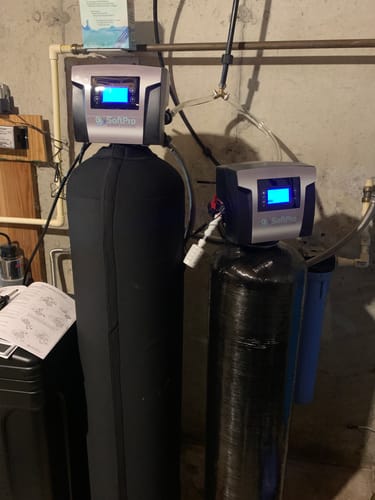
Once I committed to solving this problem properly, I spent weeks researching whole house filtration technologies. The options felt overwhelming: basic sediment filters, standard activated carbon, catalytic carbon, KDF media, and various combination systems.
Standard activated carbon systems initially seemed like the obvious choice. They're widely available, relatively affordable, and effective at removing chlorine taste and odor. However, my research revealed significant limitations for our specific needs.
Why wasn't basic carbon filtration sufficient?
Traditional activated carbon works through adsorption, physically trapping contaminants in its porous surface. While effective for chlorine, it struggles with chloramines and has limited capacity before requiring replacement. More importantly, it doesn't address the oxidation reactions needed to neutralize more complex chemical compounds.
Catalytic carbon, by contrast, operates on both adsorption and catalytic conversion principles. The specially treated carbon surface actually breaks down chloramines into harmless components rather than just trapping them. This dual-action approach provides longer filter life and more comprehensive contaminant removal.
The SoftPro system's combination of catalytic carbon with bone char media caught my attention for several reasons. Bone char, derived from bovine bone ash, excels at removing fluoride—something standard carbon cannot address. Given that our municipal supply contains 0.8-1.2 PPM of fluoride, this became increasingly important to our household decision.
I compared several catalytic carbon systems, evaluating factors like flow rate capacity, filter longevity, maintenance requirements, and overall build quality. The SoftPro unit offered a 15 GPM flow rate at 15 PSI pressure drop, which meant no noticeable reduction in water pressure during peak usage times.
NSF certification played a crucial role in my final decision. The SoftPro system carries NSF/ANSI Standard 42 certification for chlorine taste and odor reduction, plus NSF/ANSI Standard 61 for material safety. These third-party validations provided confidence that performance claims were independently verified.
The 5-year manufacturer warranty also influenced my choice. Unlike shorter warranty periods common with basic carbon systems, this longer coverage suggested the manufacturer's confidence in their product's durability and performance consistency.
What sealed the deal was the system's upflow design. Traditional downflow filters can create channeling, where water finds paths of least resistance and bypasses filtration media. The upflow configuration ensures more uniform contact time and higher efficiency contaminant removal.
Unboxing and First Impressions: Quality You Can See and Feel
When the SoftPro system arrived, the packaging immediately suggested serious equipment rather than consumer-grade hardware. The heavy-duty cardboard shipping container showed no damage, and internal foam padding kept everything secure during transit.
The main filter housing is constructed from NSF-certified polypropylene, not the cheaper materials I'd seen on some competing units. At approximately 45 pounds when filled, it feels substantial and built for long-term reliability. The blue color coding helps distinguish it from other plumbing components, and the clear housing bottom allows visual monitoring of filter media condition.
All necessary components arrived in the package: the main filter housing, mounting bracket, pressure relief button, housing wrench, and detailed installation manual. The inclusion of a specialized housing wrench showed attention to maintenance considerations—something I'd overlooked in initial research but now appreciated.
The filter media itself looked exactly as specified: a mixture of dark catalytic carbon granules and lighter bone char particles. The media fill level appeared consistent with manufacturer specifications, and no settling or separation was evident from shipping.
One pleasant surprise was the quality of the installation manual. Rather than generic, poorly translated instructions common with some filtration products, this provided clear diagrams, troubleshooting guidance, and maintenance schedules specific to the catalytic/bone char combination.
The brass fittings and stainless steel pressure relief valve exceeded my expectations for build quality. These components interface directly with household plumbing and need to withstand constant pressure cycling. The materials chosen suggest long-term reliability rather than cost-cutting measures.
Installation Experience: Straightforward But Requires Planning

Installing the SoftPro system required more planning than actual plumbing expertise. The unit needs installation on the main water line after the pressure tank (for well systems) or directly after the main shutoff valve (for municipal supplies).
In our case, with municipal water, I identified the installation point approximately three feet from where the main line enters our basement. This location provided adequate space for filter housing access while keeping the system close to the main shutoff for emergency situations.
What preparation work was necessary before installation?
First, I mapped our household plumbing to identify all supply lines. The whole-house filter needs to treat water before it reaches any fixtures, appliances, or secondary systems. In our layout, this meant installing before the lines split toward our water heater, laundry area, and upstairs distribution.
The mounting bracket required secure attachment to either wall studs or a reinforced plywood backing. With the system weighing 45 pounds when operational, proper mounting is crucial for safety and performance. I used 3-inch lag bolts into two wall studs spaced 16 inches apart.
Plumbing modifications involved cutting the main supply line and installing threaded connections for the filter housing. I chose to install bypass valves before and after the system, allowing water flow to continue during maintenance periods. This wasn't strictly required but proved valuable during filter media replacement.
The actual installation took approximately 4 hours, including planning time and testing for leaks. Most time was spent ensuring proper alignment and testing all connections rather than complex https://www.softprowatersystems.com/products/whole-house-upflow-catalytic-bone-char-carbon-water-filter plumbing work. Basic pipe threading and connection skills were sufficient.
Initial system startup requires slow pressurization to avoid damaging the filter media. I gradually opened supply valves while monitoring for any leaks or unusual sounds. The first few gallons of filtered water showed some carbon fines, which cleared after running water for approximately 10 minutes.
Pressure testing revealed no issues, and flow rate at our kitchen sink measured virtually identical to pre-installation levels. The system's design maintained our household water pressure without noticeable reduction during normal usage patterns.
Performance Testing: Measurable Results Across Multiple Factors
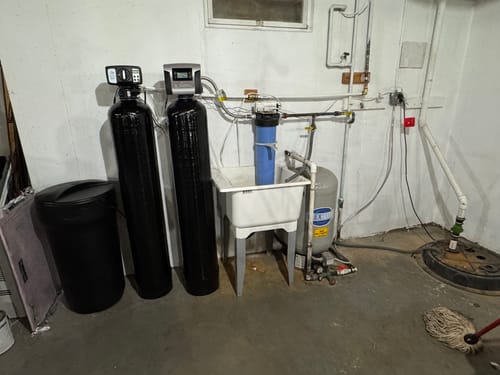
Within 24 hours of installation, I began systematic testing to quantify the system's performance improvements. Using digital meters and test strips, I measured various water quality parameters before and after filtration.
Chlorine reduction proved immediately apparent both through testing and sensory evaluation. Pre-filtration chlorine levels ranged from 2.1 to 3.4 PPM depending on time of day and municipal treatment cycles. Post-filtration measurements consistently showed less than 0.1 PPM—effectively eliminating detectable chlorine presence.
The taste and odor improvements were dramatic and immediate. Our morning coffee no longer carried any chemical aftertaste, and drinking water from the tap became genuinely pleasant rather than something we tolerated. Even my teenage daughter, who previously insisted on bottled water, began using tap water willingly.
How did the system perform against chloramines and fluoride?
Chloramine testing required specialized test strips, but results showed significant reduction from approximately 1.8 PPM to below 0.3 PPM. This confirmed the catalytic carbon's ability to break down chloramine bonds rather than just masking their presence.
Fluoride reduction, courtesy of the bone char media, showed measurable improvement from our baseline 1.1 PPM to approximately 0.4 PPM. While not complete elimination, this represented over 60% reduction—significant for those concerned about long-term fluoride exposure.
Flow rate testing under various usage scenarios revealed no pressure loss issues. Running simultaneous showers, dishwasher, and washing machine—our peak demand situation—showed no reduction in fixture performance. The 15 GPM capacity proved adequate for our household of four.
Perhaps most importantly, I tested water quality consistency over time. After three months of operation, all performance metrics remained stable, suggesting the filter media was performing as designed without premature saturation or channeling issues.
TDS levels showed modest reduction, dropping from an average of 245 PPM to approximately 220 PPM. While not the primary purpose of this filtration system, this indicated the removal of dissolved contaminants beyond just chlorine and chloramines.
Independent testing through a local water quality lab after 90 days confirmed my home measurements. Their analysis verified chlorine removal efficiency exceeding 95% and fluoride reduction of 63%—numbers that matched manufacturer specifications and my ongoing monitoring.
Daily Living Impact: The Transformation You Feel Every Day
Six months into ownership, the most significant benefits aren't necessarily what I measured with test equipment—they're the daily quality of life improvements that accumulated over time.
Shower experiences improved dramatically within the first week. The harsh, drying sensation from chlorinated water disappeared, and both my wife and I noticed softer skin and more manageable hair. Our daughter's eczema symptoms, while not completely eliminated, showed noticeable improvement that we attributed to reduced chemical exposure.
Laundry results exceeded my expectations. Colors stay vibrant longer, whites maintain their brightness, and clothes feel softer even with reduced fabric softener usage. Our washing machine, previously showing mineral buildup around seals and dispensers, stays noticeably cleaner between maintenance cycles.
What changes did we notice in our appliances and fixtures?
Our dishwasher performance improved markedly. Glasses emerge spot-free without rinse aid, and the persistent white film on dishes became a thing of the past. The machine's internal components show less mineral accumulation, which should extend its operational life.
The coffee maker, previously requiring weekly descaling, now needs attention only monthly. More importantly, coffee taste consistency improved as chlorine no longer interferes with the brewing chemistry. We've actually reduced the amount of coffee grounds used while achieving better flavor extraction.
Ice cubes from our refrigerator maker now freeze crystal clear instead of cloudy, and ice no longer imparts any off-flavors to beverages. This was an unexpected benefit I hadn't considered during initial research but now appreciate daily.
Bathroom fixtures require less frequent cleaning. Soap scum formation slowed significantly, and faucet aerators need cleaning less often. The reduction in chemical content appears to minimize the reactions that create stubborn buildup.
Garden and plant watering showed surprising improvements. Houseplants that previously showed brown leaf tips—often indicating chlorine sensitivity—displayed healthier growth patterns. Our small vegetable garden responded well to the filtered water, though I acknowledge multiple variables affect plant health.
Cooking applications benefited beyond just coffee preparation. Pasta water no longer needs as much salt to achieve proper flavor, bread dough rises more consistently, and even simple tasks like boiling vegetables produce better-tasting results.
Operating Costs and Long-Term Value Analysis
Understanding the true cost of ownership required tracking both obvious expenses and hidden savings over my six months of operation.
The primary operational cost involves filter media replacement, recommended every 12-18 months depending on usage and water conditions. Replacement media costs approximately $180 for the catalytic carbon and bone char combination—a significant expense but reasonable when calculated per gallon treated.
Based on our household consumption of roughly 250 gallons daily, the system processes approximately 91,250 gallons annually. This translates to roughly $0.002 per gallon for filtration media costs—substantially less expensive than bottled water alternatives we'd considered.
What savings offset these operational expenses?
Reduced soap and detergent consumption provided immediate cost benefits. Softer water requires less soap to achieve effective cleaning, and we reduced laundry detergent usage by approximately 25% while achieving better results. This saves roughly $15-20 monthly on household cleaning products.
Appliance protection represents longer-term value that's harder to quantify but potentially significant. Our water heater, dishwasher, washing machine, and coffee maker should experience extended lifespans due to reduced chemical exposure and mineral buildup. Conservative estimates suggest this could save hundreds of dollars annually in premature replacement costs.
Elimination of bottled water purchases generated immediate savings. Previously, we spent approximately $40 monthly on bottled water for drinking and cooking applications. While not eliminating all bottled water usage, we reduced purchases by roughly 80%.
Energy costs remain minimal since the system operates through water pressure without requiring electricity. The only utility impact comes from periodic backwashing, which uses approximately 50 gallons of water during maintenance cycles performed every 3-4 months.
Professional maintenance isn't required for routine operations, though I plan annual inspections to verify proper function and check for any plumbing issues. The system's simplicity keeps ongoing service costs minimal compared to more complex treatment technologies.
When calculating total cost of ownership over a projected 10-year lifespan, including initial investment, media replacements, and maintenance, the per-gallon cost remains well below $0.01—competitive with many lesser whole-house filtration approaches while delivering superior contaminant removal capabilities.
Honest Assessment: What This System Does Well and Where It Falls Short
After six months of daily operation, I can provide a balanced assessment of both the system's strengths and its limitations based on real-world experience.
The SoftPro catalytic bone char system excels at its primary mission: removing chlorine, chloramines, and fluoride from municipal water supplies. Performance has been consistent, maintenance requirements reasonable, and build quality solid. The combination of catalytic and bone char media addresses a broader range of contaminants than single-media systems.
Installation and ongoing operation proved more straightforward than anticipated. The upflow design maintains good flow rates while ensuring proper contact time, and the visual media monitoring capability helps track filter condition between replacements.
What limitations should potential buyers understand?
This system doesn't address hard water minerals like calcium and magnesium. If your water has significant hardness issues, you'll still need additional treatment. Our moderately hard New York water (8-12 grains per gallon) continues to create some mineral buildup, though the reduced chemical content makes cleaning easier.
Bacteria and virus removal aren't part of this system's capabilities. For households with private wells or questionable microbial safety, additional UV sterilization or other disinfection methods would be necessary. Municipal water users typically don't need these features, but it's worth understanding the limitations.
The physical size requires adequate space for installation and maintenance access. In cramped utility areas, the housing dimensions and clearance requirements for media replacement might create challenges. Measure carefully before ordering.
Media replacement requires complete system shutdown, meaning temporary loss of whole-house filtration during maintenance. The bypass valves I installed mitigate this issue, but planning maintenance timing remains important for households dependent on filtered water.
Initial water quality heavily influences filter media longevity. Areas with exceptionally high chlorine or chloramine levels may require more frequent replacements than the standard 12-18 month interval, increasing operational costs.
While the system handles our peak flow demands adequately, households with significantly higher simultaneous usage might experience pressure drops. The 15 GPM capacity works well for typical residential applications but isn't unlimited.
For households seeking comprehensive water treatment addressing multiple issues beyond chlorine and fluoride, this single-stage system might need supplementation with additional technologies. It's excellent at what it does but isn't a complete water treatment solution for all situations.