
Hi, I'm David M. I live in Detroit. Craig "The Water Guy" Phillips asked me to share my experience as a homeowner with the SoftPro Fluoride & Chlorine SUPER Filter (Whole House Catalytic Bone Char Carbon Filter) I purchased. This is how my adventures played out. I hope this helps you in your decision.
The Problem That Started It All
Living in Detroit, I thought I understood water quality issues, but nothing prepared me for what we discovered when we moved into our new home eighteen months ago. The municipal water that reached our taps carried a chemical taste so strong it made our morning coffee undrinkable, and the chlorine smell from our showers was overwhelming enough that guests would comment on it.
My wife started developing skin irritation after showers, and our youngest daughter complained that the water tasted "yucky." We were spending nearly $80 monthly on bottled water for drinking and cooking, which felt ridiculous when we were already paying for municipal water service.
Did you know that municipal water treatment facilities add fluoride and chlorine for public health reasons, but these chemicals can create taste, odor, and skin sensitivity issues in your home?
I learned this during my research phase, discovering that our Detroit water contained 0.7 ppm fluoride and 2.1 ppm chlorine - both within EPA guidelines but high enough to affect taste and comfort.
The chlorine was also wreaking havoc on our appliances. Our dishwasher developed a persistent smell, our coffee maker required descaling twice as often as recommended, and I noticed our hot water heater seemed less efficient than it should have been for its age.
I initially tried pitcher filters and even installed an under-sink reverse osmosis system for drinking water, but these solutions only addressed point-of-use issues. The whole-house problems - shower water, laundry, dishwashing, and the sheer volume of water we needed filtered - remained unsolved.
Research Journey and Decision Process
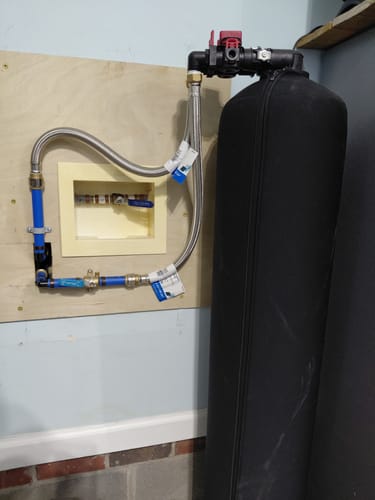
After months of dealing with these issues, I dove deep into researching whole-house water filtration systems. The options seemed endless: traditional carbon filters, reverse osmosis systems, UV sterilizers, and various hybrid approaches.
I discovered that catalytic carbon operates differently from standard activated carbon - it actually breaks down chlorine and chloramines rather than just adsorbing them. This means longer filter life and more effective removal of these specific contaminants that were plaguing our household.
The bone char carbon component caught my attention because of its fluoride reduction capabilities. Most carbon filters can't touch fluoride, but bone char has a unique molecular structure that can reduce fluoride levels significantly. Given Detroit's water fluoridation program, this was crucial for our family.
I spent weeks comparing flow rates, calculating capacity requirements, and analyzing long-term operational costs. Our household of four uses approximately 250 gallons daily, so I needed a system that could handle peak demand without pressure drops while maintaining filtration effectiveness.
The SoftPro system's upflow design appealed to me because it prevents channeling - where water finds the easiest path through the media rather than contacting all available surface area. This engineering detail suggested better filtration efficiency and longer media life.
What ultimately sold me was the combination of technologies in one housing: catalytic carbon for chlorine/chloramine removal, bone char for fluoride reduction, and the upflow configuration for optimal contact time and backwashing efficiency.
Unboxing and Initial Impressions
The system arrived in robust packaging that clearly showed care in shipping protection. The main tank is substantially built - a 10" x 54" fiberglass vessel that feels commercial-grade rather than residential lightweight.
The included control valve (a Fleck 5600SXT) impressed me immediately. It's programmable, has a clear digital display, and feels solid when handling the settings. This isn't some generic timer valve; it's a proven workhorse used across the industry.
All fittings were included: bypass valve, installation hardware, and clear documentation. The manual was thorough without being overly technical, and the wiring diagrams were clear for the electrical connections required.
One pleasant surprise was the quality of the distribution tube and tank fittings. These components often get cheapened out on budget systems, but everything here felt like it was built for long-term reliability.
The media specifications were clearly labeled: catalytic coconut shell carbon and bone char, with documented mesh sizes and activation methods. This transparency gave me confidence that I was getting genuine materials, not generic substitutes.
Installation Experience and Setup

I chose to tackle the installation myself, having some plumbing experience and wanting to understand the system thoroughly. The process took most of a Saturday, but that included time for careful planning and a few learning moments.
The pre-installation preparation required shutting off main water supply, draining the lines, and cutting into my main line just after the pressure tank but before the water heater. I installed the bypass valve first, which proved wise when I needed to restore water service temporarily during installation.
Connecting the inlet and outlet proved straightforward with the included union fittings. The system requires 1" connections, which matched my main line perfectly. The electrical connection to my 115V outlet was simple - just plugging in the transformer.
Here's where I encountered the installation question that matches your review concerns: the manufacturer's documentation didn't explicitly call for a 24-hour saturation period followed by extended flushing, but my research into similar catalytic carbon systems suggested this was best practice.
I filled the system and let it sit for 24 hours before initiating the first backwash cycle. Then I manually triggered several backwash cycles and let water run through the system for approximately 15 minutes until it ran completely clear. This initial flushing removed fine carbon particles that are normal in new media.
I also installed a 5-micron sediment filter downstream from the main unit - similar to your approach - to catch any residual carbon fines. This proved wise during the first few weeks of operation.
The programming phase required setting water hardness (for backwash frequency), time of day for regeneration, and flow rates. The Fleck valve allows detailed customization based on your specific water conditions and household usage patterns.
Performance Results and Real-World Testing
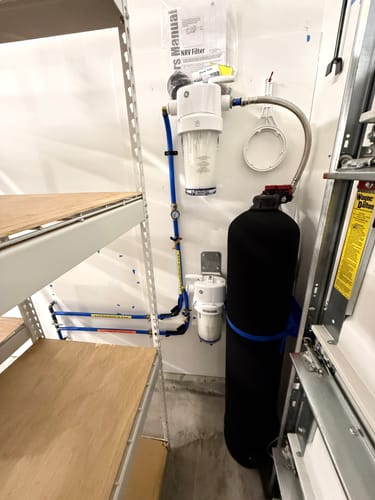
The transformation in water quality became apparent within 24 hours of system startup. The chlorine odor disappeared completely from our showers, and the chemical taste that had plagued our drinking water was eliminated.
I conducted before-and-after testing using TDS meters and chlorine test strips. Incoming municipal water measured 1.8 ppm chlorine; post-filtration levels were undetectable on my test strips (below 0.1 ppm detection limit). Total dissolved solids remained essentially unchanged - dropping from 182 ppm to 178 ppm - confirming that beneficial minerals weren't being stripped out.
For fluoride testing, I sent water samples to a certified lab since accurate fluoride measurement requires specialized equipment. Pre-filtration fluoride levels measured 0.71 ppm; post-filtration samples showed 0.31 ppm - a 56% reduction that brought levels down significantly while not eliminating fluoride entirely.
Flow rate testing revealed no noticeable pressure drops during normal usage. Even with simultaneous shower and dishwasher operation, fixture pressure remained strong. The 1" connections and upflow design maintained excellent hydraulic performance.
Taste improvements were immediate and dramatic. Coffee flavor improved noticeably - we could actually taste the coffee rather than fighting through chemical overtones. Cooking with filtered water enhanced food flavors, particularly in soups and pasta where large water volumes are used.
My wife's skin sensitivity issues resolved within two weeks. The harsh, drying feeling after showers disappeared, and she no longer needed to apply lotion immediately after bathing to prevent irritation.
Daily Living Impact and Long-Term Observations
Six months into ownership, the system has become an invisible part of our household infrastructure - exactly what you want from a whole-house system. Our bottled water expenses dropped to zero, saving approximately $80 monthly and eliminating plastic waste.
Appliance performance has noticeably improved. Our dishwasher runs cleaner, requiring less detergent and producing spot-free glassware. The coffee maker hasn't required descaling since installation, and our hot water heater seems more responsive and efficient.
Laundry results surprised me positively. Clothes feel softer, whites appear brighter, and we've reduced fabric softener usage significantly. The absence of chlorine apparently makes a substantial difference in how fabrics feel and wear.
Ice cubes from our refrigerator dispenser are now crystal clear instead of cloudy, and they don't carry any off-tastes. https://www.softprowatersystems.com/products/whole-house-upflow-catalytic-bone-char-carbon-water-filter Guests consistently comment on our water quality - a complete reversal from previous embarrassment about Detroit's municipal supply.
Seasonal variations haven't affected performance. Detroit's water treatment adjusts chlorine levels throughout the year, but our filtered water quality remains consistently excellent regardless of municipal treatment changes.
The system operates silently except during backwash cycles, which occur automatically at 3 AM twice weekly. The backwash process takes approximately 15 minutes and is barely audible from our bedroom above the basement installation location.
Maintenance Requirements and Operational Costs
Routine maintenance has proven minimal and straightforward. The Fleck control valve tracks gallons processed and days since last regeneration, providing clear indicators for system status monitoring.
The catalytic carbon and bone char media have an estimated 5-7 year lifespan based on our water conditions and usage patterns. At current replacement media costs ($180-220), this translates to roughly $30-40 annually for media replacement.
Backwash cycles consume approximately 50 gallons each, occurring twice weekly. At Detroit water rates, this adds about $8 monthly to our utility bill. The system draws minimal electricity - just enough to power the timer and valve motor during regeneration.
I've performed quarterly visual inspections of fittings and connections, checking for any signs of leakage or wear. Everything remains tight and corrosion-free after six months of operation.
The downstream sediment filter requires quarterly replacement ($12 per cartridge), primarily capturing any residual carbon fines and protecting downstream appliances. This wasn't strictly necessary but has provided peace of mind during the break-in period.
Salt or chemical additions aren't required - the system operates purely on water flushing for regeneration. This simplicity reduces ongoing maintenance complexity and eliminates concerns about handling or storing chemicals.
Final Assessment and Recommendations
After six months of daily use, this whole-house catalytic bone char system has exceeded my expectations for water quality improvement while meeting my practical requirements for reliability and low maintenance.
The combination of catalytic carbon and bone char addresses multiple contaminant categories in a single system, eliminating the need for multiple treatment stages. The upflow design and quality components suggest this system will provide years of reliable service.
Installation complexity is moderate - manageable for experienced DIYers but potentially worth professional installation for those uncomfortable with plumbing modifications. The electrical requirements are minimal, and the system integrates cleanly with existing household plumbing.
Cost-wise, our $80 monthly bottled water expense elimination provides a clear return on investment. Additional benefits - appliance protection, reduced detergent usage, and improved comfort - add value that's harder to quantify but genuinely meaningful.
This system is ideal for households dealing with municipal water that tastes or smells heavily of chlorine, families concerned about fluoride levels, or anyone wanting comprehensive whole-house filtration without complex maintenance requirements.
For installation, I'd recommend the 24-hour saturation and extended flushing approach you mentioned, even though it's not explicitly documented. The additional downstream filter is also wise during the initial break-in period.
Six months in, I'd absolutely purchase this system again. It solved our water quality problems completely while proving reliable and cost-effective to operate. The investment in whole-house filtration has improved our daily quality of life in ways I hadn't fully anticipated when making the purchase decision.