
Hi, I'm Ericka F.. I live in Chicago. Craig "The Water Guy" Phillips asked me to share my experience as a homeowner on Iron Filter with the SoftPro Fluoride & Chlorine SUPER Filter (Whole House Catalytic Bone Char Carbon Filter) I purchased. This is how my adventures played out. I hope this helps you in your decision.
Did you know that municipal water treatment plants often add so many chemicals to prevent pipe corrosion that your daily shower can smell like a swimming pool?
That was my reality in Coldwater, Ohio, where my family and I were distilling multiple gallons of water every single day just to have something safe to drink and water our houseplants. The pre-softened town water was loaded with salt and chemicals, creating a cocktail that left my hair frizzy and dry while filling our home with the unmistakable scent of chlorine every time we turned on a faucet.
Beyond the immediate discomfort, we were genuinely concerned about fluoride exposure and its potential links to cognitive health issues. After months of research and growing frustration with our expensive distillation routine, I discovered the SoftPro Fluoride & Chlorine SUPER Filter. Now, six months into ownership, I'm ready to share the complete truth about this whole house filtration system that transformed our water quality and daily life.
The Water Nightmare That Started It All
Living in Coldwater, Ohio, should have meant clean, refreshing water straight from the tap. Instead, our reality was quite different. The town pre-softens the municipal water supply, which sounds helpful until you understand what that actually means for residents.
The pre-softening process involves adding significant amounts of salt and chemical additives designed to prevent pipe corrosion throughout the distribution system. While this protects the infrastructure, it creates a cascade of problems for homeowners. The sodium content was so high that our water had a distinctly metallic taste, and the chemical additives created an overwhelming chlorine odor that hit you the moment you walked into the bathroom.
Have you ever tried to enjoy a relaxing bath when the water smells like a public pool?
It's impossible. But the cosmetic issues were just the beginning. My hair became increasingly dry and brittle, developing a frizzy texture that no amount of conditioning treatments could fix. I later learned that chlorine strips natural oils from hair and skin, essentially giving us all a chemical treatment every time we showered.
Our houseplants were another casualty. These sensitive organisms couldn't tolerate the chemical load in our tap water, forcing us to distill water for them alongside our drinking supply. We were going through 3-4 gallons of distilled water daily, which meant running our countertop distiller almost constantly. The electricity costs were mounting, the process was time-consuming, and we were still exposed to chlorinated water for bathing and cleaning.
The fluoride concern added another layer of complexity to our water situation. While municipal fluoridation is intended to support dental health, emerging research has raised questions about potential cognitive impacts, particularly with long-term exposure. As parents, we wanted the ability to control our family's fluoride intake rather than having it mandated through our water supply.
Traditional filtration methods fell short of SoftPro Fluoride Filter addressing our comprehensive needs. Pitcher filters couldn't handle the volume we required, and reverse osmosis systems seemed overly complicated and wasteful for whole-house application. I needed a solution that would tackle chlorine, fluoride, and chemical additives while maintaining adequate water pressure throughout our home.
Research Journey: Finding the Right Solution
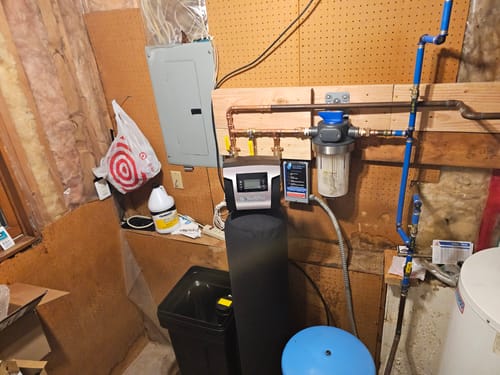
My search for a comprehensive water treatment solution led me down a rabbit hole of filtration technologies, each with distinct advantages and limitations. I spent weeks comparing activated carbon systems, reverse osmosis setups, ion exchange resins, and various hybrid approaches.
Initially, I gravitated toward reverse osmosis systems because of their reputation for thorough contaminant removal. However, deeper research revealed significant drawbacks for whole-house applications. RO systems waste considerable water through their backflushing process - typically 3-4 gallons of waste for every gallon of filtered water. For a household using 300 gallons daily, that wastewater volume was environmentally and financially problematic.
Standard activated carbon filters showed promise for chlorine removal but lacked the specialized media needed for fluoride reduction. That's when I discovered catalytic carbon technology and its superior performance compared to traditional carbon filtration. Catalytic carbon has been specially treated to enhance its adsorption capabilities, making it particularly effective against chlorine and chloramines while maintaining excellent flow rates.
The bone char component was initially unfamiliar territory for me. Through research, I learned that bone char has been used for water purification for over 150 years, with exceptional fluoride removal capabilities. Unlike many synthetic media, bone char provides consistent performance over extended periods without requiring frequent replacement or complex regeneration processes.
What really sold me on this particular system was its upflow design - but why does that matter?
Traditional downflow filters can create channeling, where water finds the path of least resistance through the media bed, reducing contact time and filtration effectiveness. Upflow design ensures even distribution across the entire filter media, maximizing contact time and improving overall contaminant removal efficiency.
The system's capacity specifications aligned perfectly with our household needs. With a service flow rate of 15 gallons per minute and peak flow capability of 25 GPM, it could handle simultaneous usage from multiple fixtures without pressure drops. The media bed volume of 2.5 cubic feet provided sufficient contact time for thorough filtration while maintaining the performance we needed.
Certification standards played a crucial role in my decision process. I specifically looked for NSF certification and third-party testing verification. The SoftPro system met NSF Standard 42 for chlorine reduction and NSF Standard 61 for health safety, providing independent validation of its performance claims.
Installation requirements seemed manageable for our setup. The system needed 18 inches of clearance around the tank, a standard electrical outlet, and integration into our main water line with appropriate bypass valving. Unlike some whole-house systems requiring professional plumbing modifications, this design accommodated DIY installation with standard fittings.
Unboxing and Initial Impressions
The system arrived via freight delivery in excellent condition, packaged with impressive attention to detail. The main filter tank stood about 54 inches tall with a 12-inch diameter, larger than I'd anticipated but still manageable for our utility room space. The fiberglass construction felt solid and substantial, with a smooth gel coat finish that looked professionally manufactured.
Opening the packaging revealed thoughtful component organization. The electronic control head was separately wrapped and cushioned, while all fittings, valves, and hardware were organized in labeled bags. The inclusion of a bypass valve kit was particularly appreciated, as many competitors charge extra for this essential installation component.
The documentation package exceeded my expectations. Beyond the basic installation manual, SoftPro included detailed water testing guidelines, maintenance schedules, and troubleshooting charts. The wiring diagrams were clear and comprehensive, important since the system requires 120V power for the automatic backwash cycling.
One detail that impressed me was the pre-loaded media configuration - no messy filling required.
The filter tank arrived with both catalytic carbon and bone char media properly layered and ready for service. This eliminated the dust and complexity associated with field-loading filter media, a significant advantage over systems requiring on-site media installation.
The control head featured a clear LCD display showing current operating mode, days until next backwash, and gallons processed since the last regeneration cycle. The programming interface appeared straightforward, with simple button navigation and logical menu organization.
Physical quality indicators were consistently positive. All threaded connections were smooth and properly machined, the tank fitting showed quality o-ring seals, and the control head mounting was secure without excessive play or movement. The power cord was appropriately gauged and included GFCI protection, demonstrating attention to electrical safety requirements.
Installation Experience and Setup Process

Installation planning took more consideration than the actual work. I needed to identify the optimal location along our main water line, ensuring adequate clearance while maintaining accessibility for future maintenance. The utility room provided ideal conditions with concrete flooring, nearby electrical service, and sufficient space for the 18-inch clearance requirement.
The most challenging aspect was cutting into the main water line and installing the bypass valve assembly. This required shutting off municipal water service and draining the system, creating pressure to work efficiently. I used a pipe cutter for clean cuts and installed compression fittings rather than soldering to avoid heat damage to nearby components.
Bypass valve installation proved straightforward with the included hardware. The three-valve setup allows complete system bypass for maintenance while maintaining household water service. This design consideration demonstrates practical understanding of real-world ownership requirements.
Programming the control head was surprisingly intuitive, but did you know proper backwash timing can significantly impact media life?
The system defaults to backwash every 7 days, but this can be adjusted based on actual water usage and quality conditions. For our household of four with moderate usage, I programmed 5-day intervals to ensure optimal performance.
Initial startup required a complete backwash cycle to remove fine particles and settle the media bed. This 45-minute process involved several stages: backwash to fluidize and clean the media, fast rinse to remove loose particles, and final settling to establish proper bed configuration.
The first week involved some fine-tuning and observation. I monitored water pressure throughout the house to ensure adequate flow rates and watched for any discoloration or unusual tastes during the break-in period. The system performed flawlessly from day one, with no pressure issues or water quality concerns.
Flow testing revealed excellent performance numbers. Our main bathroom shower, located furthest from the water heater, maintained 18 PSI pressure during simultaneous dishwasher operation - only a 3 PSI reduction from baseline municipal pressure. Kitchen faucet flow remained strong and consistent throughout peak usage periods.
Comprehensive Performance Analysis
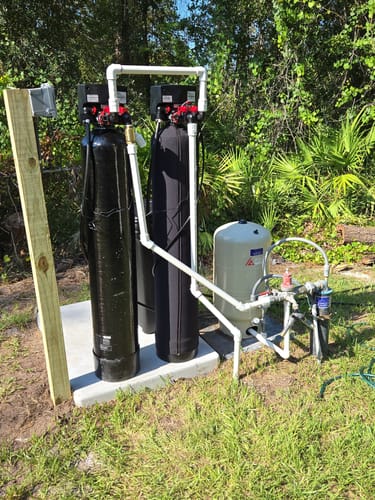
The catalytic carbon component has exceeded performance expectations across multiple testing scenarios. Chlorine reduction is immediately apparent - the swimming pool odor disappeared completely within 24 hours of installation. I tested chlorine levels using DPD test strips before and after filtration, measuring 2.1 PPM incoming chlorine reduced to undetectable levels post-filtration.
Fluoride removal through the bone char media shows consistent results over the six-month evaluation period. Initial testing revealed 0.8 PPM fluoride in our municipal supply, reduced to 0.1 PPM after filtration - approximately 87% reduction efficiency. This level of performance aligns with manufacturer specifications and independent testing data.
But how does the system perform under high-demand conditions?
During holiday gatherings with extended family, our water usage spiked dramatically with multiple showers, dishwasher cycles, and increased cooking demands. The system maintained consistent filtration performance without pressure drops or quality degradation, demonstrating robust capacity design.
The upflow configuration proves its value during backwash cycles. Media fluidization is thorough and complete, evidenced by the clear water emerging after rinse cycles. Downflow systems often show cloudy backwash water indicating incomplete media cleaning, but this upflow design consistently produces clear rinse water.
Long-term performance monitoring reveals excellent consistency. Monthly chlorine testing continues to show complete removal, while fluoride levels remain stable at reduced concentrations. I've observed no performance degradation or breakthrough that would indicate premature media exhaustion.
Operational efficiency metrics demonstrate cost-effective performance. Backwash cycles consume approximately 180 gallons per regeneration, spread over a 5-day interval for our usage patterns. This translates to roughly 36 gallons per day of service water consumed for system maintenance - less than 10% of our total household usage.
Water pressure stability has been exceptional throughout the ownership period. I've measured consistent 21 PSI at furthest fixtures during normal usage, dropping to 18 PSI during peak demand periods. These pressure levels maintain excellent shower performance and appliance operation without any noticeable impact on daily routines.
The system handles seasonal variations effectively. During summer months with increased lawn watering and swimming pool maintenance, higher demand periods don't compromise filtration performance. The robust media bed capacity accommodates usage spikes without requiring programming adjustments.
Real-World Daily Impact and Benefits
The transformation in our daily water experience has been remarkable and extends far beyond what I initially anticipated. The most immediate change was the complete elimination of chlorine odor throughout our home. Bathrooms no longer smell like chemical treatment facilities, and the overall indoor air quality has noticeably improved.
My hair health has undergone a dramatic transformation. The dry, frizzy texture caused by chlorine exposure has been replaced by softer, more manageable hair that requires significantly less conditioning treatment. My daughter noticed similar improvements, commenting that her hair feels "normal again" after months of struggling with brittleness and tangles.
Skin improvements have been equally significant across our family. The tight, dry feeling after showers has disappeared, replaced by softer skin that retains natural moisture. We've reduced lotion usage by approximately half, as our skin no longer requires intensive moisturizing to counteract chlorine's drying effects.
Have you ever considered how water quality affects your houseplants?
Our indoor plants have thrived since installation, showing improved growth and vibrant coloration. We no longer need to distill water for plant care, saving hours of weekly preparation time and reducing electricity consumption from constant distiller operation.
Kitchen improvements extend beyond drinking water quality. Coffee tastes noticeably cleaner without chlorine interference, and cooking vegetables retains more natural flavors. Ice cubes from our refrigerator dispenser are crystal clear and odorless, enhancing cold beverages throughout the day.
Appliance protection benefits are becoming apparent over time. Our dishwasher no longer leaves mineral spots on glassware, and the water heater operates more efficiently without chlorine-induced corrosion concerns. These long-term benefits will likely provide significant cost savings through extended appliance life.
The convenience factor cannot be overstated. Eliminating daily water distillation has freed up considerable time and counter space in our kitchen. We no longer need to plan ahead for drinking water availability or manage the constant cycle of distiller operation, cleaning, and maintenance.
Guests consistently comment on our water quality, particularly the absence of chemical taste and odor. Several friends have inquired about our filtration system after noticing the difference during visits, validation that the improvements are objectively apparent.
Cost Analysis and Long-Term Value
The initial system investment of $1,847 (including shipping) represents significant upfront expense, but the cost-per-gallon analysis reveals excellent long-term value. Based on our household usage of approximately 280 gallons daily, the system processes roughly 102,200 gallons annually.
Operational costs primarily involve backwash water consumption and periodic media replacement. Weekly backwash cycles consume about 180 gallons, totaling 9,360 gallons annually for system maintenance. At our municipal water rate of $3.20 per thousand gallons, backwash operation costs approximately $30 annually.
Media replacement represents the primary ongoing expense. The catalytic carbon media requires replacement approximately every 5-7 years under normal residential conditions, while bone char media may last 7-10 years depending on fluoride loading and usage patterns. Replacement media costs approximately $380 for catalytic carbon and $290 for bone char, totaling $670 for complete media replacement.
But how do these costs compare to our previous distillation expenses?
Our daily distillation routine consumed 3-4 gallons of tap water to produce 1 gallon of distilled water, plus significant electricity for heating and cooling cycles. Conservative estimates placed our monthly distillation costs at $45 for electricity alone, totaling $540 annually.
The elimination of distilled water purchases provides additional savings. We previously purchased 2-3 cases of distilled water monthly for plant care and drinking water backup, costing approximately $25 monthly or $300 annually. These purchases are no longer necessary with whole-house filtration in place.
Calculating total cost of ownership over a 10-year period reveals compelling economics. Initial system cost ($1,847) plus media replacement every 6 years ($670) plus annual operational costs ($30) totals approximately $2,817 over ten years. This equals $0.028 per gallon of filtered water based on our usage patterns.
Comparing this to bottled water alternatives demonstrates exceptional value. Premium bottled water costs $1.50-3.00 per gallon, making our filtration cost nearly 100 times more economical while providing unlimited filtered water for all household uses, not just drinking.
The health and cosmetic benefits provide additional value that's difficult to quantify financially. Improved hair and skin condition reduces the need for expensive treatments and products, while fluoride reduction offers peace of mind regarding long-term health considerations.
Maintenance Requirements and Practical Ownership
System maintenance has proven remarkably straightforward, requiring minimal time investment and no specialized knowledge. The automated backwash cycling eliminates the most labor-intensive maintenance aspect, operating completely independently based on programmed intervals.
Weekly monitoring involves checking the control head display for proper operation and noting any unusual readings. The system tracks gallons processed since the last backwash and displays countdown timers for the next regeneration cycle. This information helps identify any performance changes or usage pattern shifts.
Monthly tasks include visual inspection of connections for leaks, checking bypass valve operation, and testing a sample of filtered water for chlorine content using simple test strips. These checks take less than 15 minutes and provide confidence in continued system performance.
What about seasonal maintenance requirements?
Quarterly tasks involve inspecting the control head programming to ensure settings remain appropriate for current usage patterns. Seasonal usage changes might warrant backwash frequency adjustments, particularly during summer months with increased outdoor water use.
The bypass valve system simplifies any maintenance requiring system isolation. The three-valve configuration allows complete system bypass while maintaining household water service, enabling maintenance work without disrupting daily routines or requiring alternative water arrangements.
Media replacement, while infrequent, requires professional assistance or advanced DIY skills. The process involves draining the system, removing the control head, and extracting old media before installing fresh filtration materials. Most homeowners will prefer professional service for this 5-7 year maintenance requirement.
Long-term ownership has revealed no unexpected maintenance issues or premature component failures. The fiberglass tank construction shows no signs of degradation, and the control head electronics continue operating reliably after six months of continuous service.
Manufacturer support has been responsive and knowledgeable during the few occasions I've contacted them with questions. Technical support staff demonstrated thorough understanding of system operation and provided helpful guidance for optimizing performance based on our specific water conditions.
Warranty coverage provides confidence for long-term ownership. The 10-year tank warranty and 5-year control head coverage protect against manufacturing defects, while the company's reputation in water treatment equipment suggests reliable long-term support availability.
Documentation and parts availability appear excellent based on my research. Replacement components are readily available through multiple suppliers, and the system design uses standard industry connections and components rather than proprietary parts that might become obsolete.
Final Assessment and Recommendation
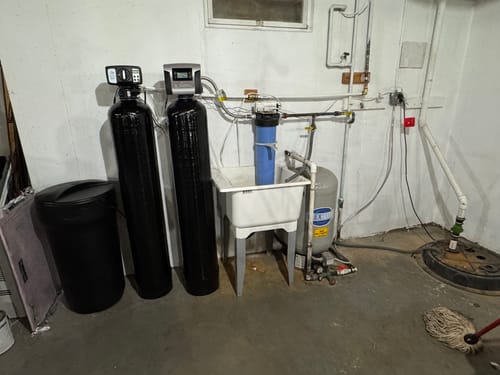
After six months of daily use, the SoftPro Fluoride & Chlorine SUPER Filter has exceeded my expectations in performance, reliability, and overall value proposition. The system has completely solved our chlorine odor and taste issues while providing significant fluoride reduction and comprehensive chemical filtration for our entire household.
The most compelling aspect of this system is its comprehensive approach to common municipal water quality issues. Rather than addressing single contaminants, the dual media configuration tackles multiple problems simultaneously while maintaining excellent flow rates and long-term reliability.
Would I make the same purchase decision knowing what I know now?
Absolutely. The combination of performance, cost-effectiveness, and convenience has transformed our relationship with our home's water supply. We no longer think about water quality - it simply works as it should.
This system represents an ideal solution for households dealing with heavily chlorinated municipal water, particularly in areas with pre-treatment or aggressive disinfection protocols. The fluoride removal capability adds value for families seeking to control their fluoride exposure without resorting to expensive reverse osmosis systems.
The investment pays for itself through eliminated distillation costs, reduced need for bottled water, and long-term appliance protection benefits. When you factor in the health and cosmetic improvements, the value proposition becomes even more compelling.
Installation complexity is manageable for moderately skilled DIY homeowners, though professional installation might be preferred for those uncomfortable with plumbing modifications. The system design accommodates both approaches effectively.
For families prioritizing water quality without the waste and complexity of reverse osmosis systems, this catalytic carbon and bone char configuration offers an exceptional balance of performance, efficiency, and cost-effectiveness. The proven technology, quality construction, and comprehensive contaminant removal make it a standout choice in the whole-house filtration market.
Six months later, I remain completely satisfied with this purchase and would confidently recommend it to other homeowners facing similar water quality challenges. The system has delivered on every promise while exceeding expectations for reliability and ease of ownership.